Game Rooster: Bold, Vibrant & Booth-Ready
First Impression: Fierce Charm Meets Craft Fair Appeal
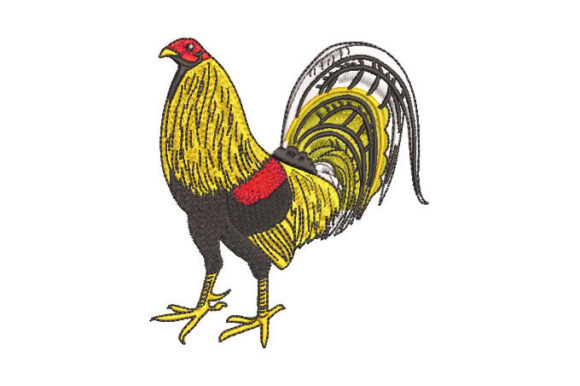
As an embroidery designer who’s prepped over 200 craft fair booths—and shipped thousands of handmade products—I opened Game Rooster expecting flair. What I got was immediate energy: a bold, colorful bird design that reads “fierce and naturally fascinating” at first glance—not cute, not rustic, not minimalist—but alive. It leans modern-folk with confident line work, saturated thread colors, and intentional movement in the feathers and stance. That’s gold for handmade markets: it stands out in a sea of florals and script fonts without shouting. Customers pause. They tilt their heads. They point. That’s your opening sale.
Where Game Rooster Shines On Real Craft Fair Products
This isn’t just a pretty embroidery file—it’s a versatile craft fair product engine. Here’s where it delivers strongest:
- Tote bag design: Centered on a natural canvas or denim tote, Game Rooster becomes a statement piece—large enough to read from six feet away, detailed enough to reward closer inspection. Its vertical posture fits perfectly on the front panel.
- Apron embroidery: Positioned high on the bib (just below the waist tie), it adds personality without overwhelming function. The rooster’s proud chest aligns naturally with the apron’s shape.
- Tea towel embroidery: Works beautifully in the upper third of a linen or cotton tea towel—balanced, graphic, and kitchen-branded without being kitschy.
- Embroidered patch: At 3–4 inches tall, Game Rooster retains clarity as a sew-on or iron-on patch. Ideal for jackets, denim bags, or gift-ready pouches.
- Pillow cover & small pouch: Scales down cleanly. As a focal motif on a 16" square pillow or 5" zip pouch, it feels intentional, premium, and giftable.
It’s less ideal for curved cap fronts (too much fine detail risks distortion) or ultra-thin fabric where dense stitch areas could pucker. But on flat, stable surfaces—especially medium-weight cotton, linen, or twill—it sings.
What Makes Game Rooster Sell—Beyond Just Looks
Three things seal the deal at a busy market: instant readability, perceived handmade quality, and booth cohesion. Game Rooster nails all three.
At a glance, it communicates confidence and character—no explanation needed. That’s critical when shoppers browse at walking pace. Its layered feathering and expressive eye suggest skilled digitizing, elevating the perceived value of any finished product. And because it’s inherently graphic—not overly delicate or text-heavy—it pairs effortlessly with other Birds-themed designs or neutral handmade goods, strengthening your overall booth display.
For Etsy sellers and digital embroidery file shops, Game Rooster is a strong printable mockup asset: it photographs crisply on light and mid-tone fabrics, pops against solid backgrounds, and translates well into lifestyle shots (think: embroidered tote beside fresh eggs and ceramic mugs). Its “cool bird” vibe appeals across age groups—teens love the edge, older buyers appreciate the folk-art confidence.
Production Notes Every Embroidery Designer Should Check
Before cutting fabric or loading hoops, run these practical checks:
- Test on scrap fabric first—especially if using textured towels or thick denim. Dense stitch areas (like the rooster’s crest or wing contour) may need lightweight cutaway stabilizer to prevent shadowing or puckering.
- Verify thread contrast on your base fabric. This design relies on rich color layering—if stitching on dark fabric, confirm the lightest thread tones still read clearly.
- Review spacing and stitch density in your embroidery software. Look for tight clusters that might cause thread breaks or tension issues during batch production.
- Confirm hoop size compatibility before committing to large runs. If the full design requires a 6x10 hoop but you’re using 5x7 machines, check whether a scaled-down version maintains impact.
- Create at least one real mockup—not just a digital preview. See how the texture of your chosen fabric interacts with the feather details. Linen’s slubs can soften edges; smooth cotton highlights them.
- Compare fabric colors side-by-side—a warm oat or heather grey background makes the reds and golds sing; cool-navy fabric may mute the warmth. Let your palette guide your product lineup.
- Confirm commercial licensing before selling finished products. Since this is a machine embroidery design sold as a digital embroidery file, ensure your license permits resale of physical items—not just personal use.
Careful-Use Considerations for Maximum Clarity
Game Rooster is vibrant and expressive—but clarity depends on execution. Avoid these pitfalls:
- Don’t shrink it below 2.5 inches tall—tiny beak details, feather separation, and eye definition blur fast.
- Avoid heavy or napped fabrics (like fleece or thick terry) unless you adjust stabilizer weight and reduce density—otherwise, the design loses sharpness.
- Curved surfaces (caps, curved pouches) require re-digitizing or careful placement—stick to flat panels unless you’ve tested it.
- No lettering or fine outlines means no concerns about tiny text—but do watch for tight inner corners where thread buildup can occur.
Final Thought: A Reliable Workhorse for Creative Entrepreneurs
Game Rooster isn’t just another birds embroidery—it’s a smart, scalable embroidery asset built for real-world making. It balances visual punch with production practicality, supports brand consistency across product types, and sparks conversation at every craft fair. Whether you’re an Etsy seller building a cohesive shop, a boutique maker launching a spring collection, or a small shop product line testing its first embroidered line, Game Rooster delivers handmade quality with commercial readiness. Just remember: test, stabilize, photograph thoughtfully, and let that fierce, colorful character do the talking.